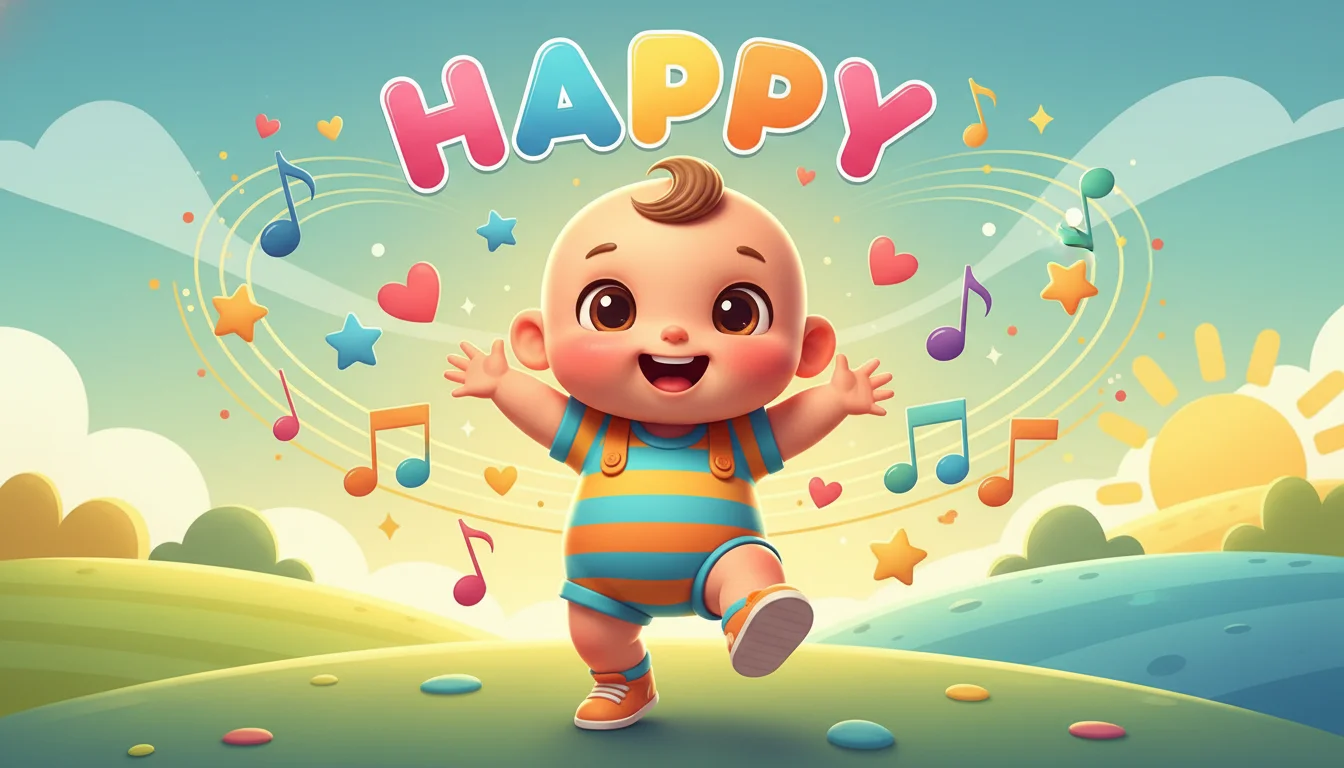
The AI baby dance is one of those formats that is instantly legible and almost impossible to date. A small child does a confident, slightly too-good dance move for a couple of seconds. The joke is the mismatch. It works without sound, without context, and without a caption.
Search interest around "baby dance ai" is small and spiky — Google reported tens of impressions, not thousands, for the term across a month on this site's own Search Console data — but the format itself travelled far beyond the search volume, because it spread inside feeds rather than through search. That is the first useful fact about the trend: it was never a search trend.
Tracing the origin honestly
The public trail is short and mostly anecdotal. A widely shared Reddit thread on the format — titled around the "viral baby dance from Kling AI" — attributes the look to Kling, the video model. That matches the mechanics: the earliest convincing clips had the specific combination of a still camera, a plain background, and a short, low-amplitude repeated movement, which is what motion-transfer and image-to-video models do best.
What we can say with confidence:
- The clips are generated, not filmed. Anyone who has used the tools can spot the tells.
- Several models can produce them. Kling is the one most often named; the same result is achievable in other short-video models, including the ones this studio runs.
- The format moved faster than any written explanation of it. There is no canonical tutorial that launched it.
What we cannot say, and will not invent: a specific first upload, a specific creator, or a specific date. Trend origin stories get retconned constantly, and a wrong attribution in a blog post is worse than an honest "the trail is anecdotal".
What actually makes a clip read as "the trend"
Watch twenty of them and the cues repeat. They are production choices, not model features:
1. A plain background. A wall, a bedsheet, a sofa back. Busy rooms force the model to invent detail between frames, and invented detail is where identity drift shows.
2. A locked camera. No pan, no zoom, no handheld wobble. The camera move is the first thing that breaks the illusion, because a real camera move would parallax the background and the model does not know how.
3. One repeated movement. A sway, a bounce, a shoulder shimmy. Not choreography, not a sequence. The format is a loop, and a loop is easier to keep stable than a progression.
4. A face that holds. This is the hard part and it is mostly an input problem: a sharp, front-facing, evenly lit photo with the whole head visible gives the model the most to work with.
5. Short. Five seconds is usually enough. Ten seconds gives the model more room to drift, and the feed does not reward the extra length.
6. The mismatch. The subject reads as a baby; the movement reads as a trained dancer. Remove either half and it is just a video of a child.
Why copying the specific clip fails
The obvious move — remake the clip you saw — has two problems. The first is timing: by the time a specific clip is in your feed, the format has peaked. The second is that copying fixes the weakest variable. The person who made the original had a specific photo, a specific prompt, and a specific model version; you have none of those.
Reproducing the cues instead of the clip gives you something that reads as the trend without being a copy. That is also the only version you can honestly claim as yours.
Reproducing it in this studio
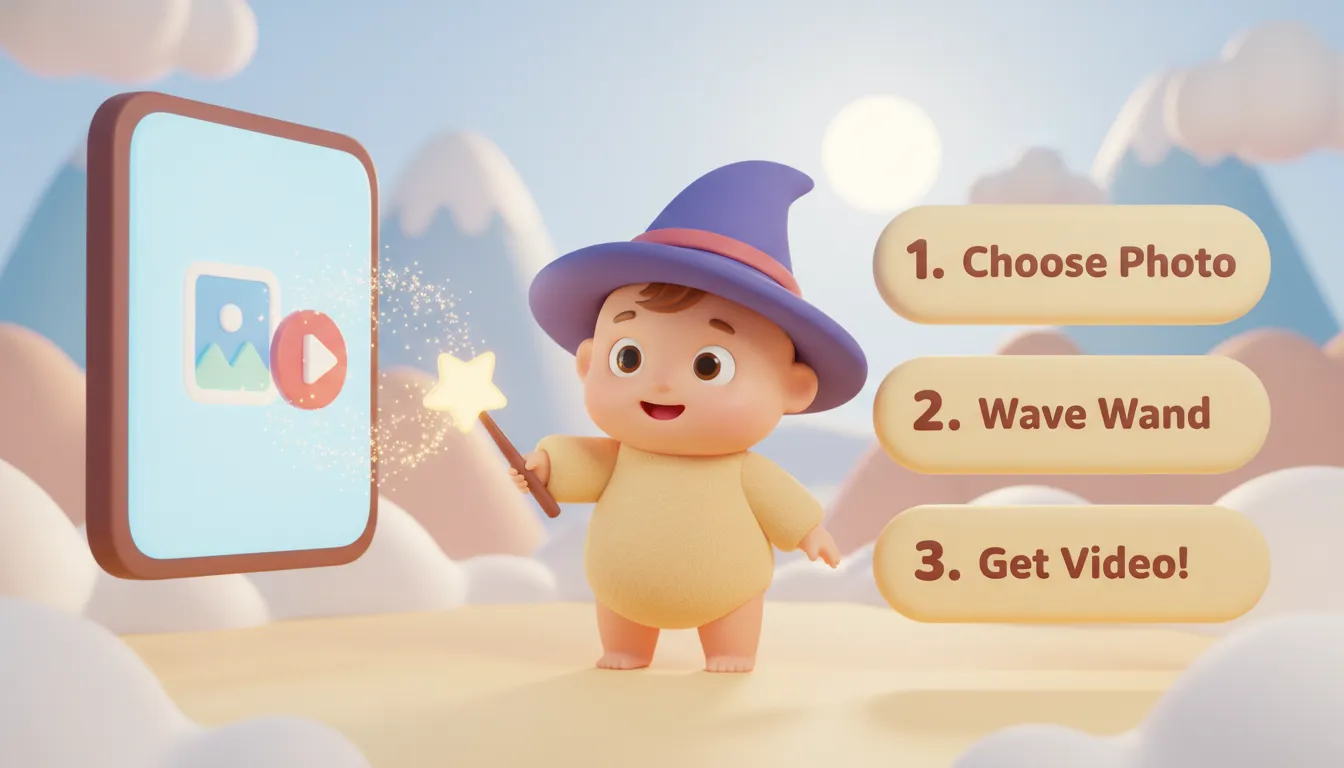
Three modes can produce the format, at different costs and with different risk:
| Mode | Credits | Best when | Main risk |
|---|---|---|---|
| Text to video, 5s | 300 | You have no photo and want a generic subject | Subject may not read as a specific child |
| Image to video, 5s | 300 | You own a photo and want that face | Identity drift on longer or busier scenes |
| Motion control, standard 720p | 500 | You have a reference clip whose movement you want | Reference must be one you have the right to use |
The prompt is doing less work than people expect. "Gentle side-to-side sway, arms lifting on each bounce, locked camera, plain wall, full body in frame, vertical" outperforms a paragraph of styling adjectives, because the model is solving for motion and framing, not mood.
The hard rule: use a photo you own or a generated subject. Using a photo of a child you found online is not a grey area — see the consent guide.
The lifecycle question
Format trends behave predictably. Reach climbs while the surprise is intact, plateaus when every feed has shown it, then declines into a smaller evergreen niche — greeting cards, birthday messages, baby-shower invitations. The clip does not stop working; it stops being novel.
That has a practical implication for anyone arriving late: the evergreen use cases are the durable ones. A dancing-baby birthday message, a baby-shower invite video, a "first steps, but make it a dance" family post. Those do not need the trend to be hot, and they convert to a purchase much more directly than a clip made to chase a feed.
What to take from the trend
The format is a production recipe: plain background, locked camera, one movement, five seconds, a subject that reads as a baby. The model is interchangeable. The song is a platform decision, covered in the audio guide.
And the honest framing for anyone writing about it: nobody knows exactly who posted the first one. What is verifiable is the recipe, and the recipe is what you can actually use.
Frequently asked questions
What is the viral AI dance called?
There is no official name. People describe it by what they see — "AI baby dance", "dancing baby trend", "baby dance AI" — and the clips are made with several different video models. A widely shared Reddit thread on the trend attributes the look to Kling, but the format spread across tools, so the name describes a motion pattern rather than one product.
Did the trend start on TikTok?
The clips spread on TikTok, Instagram Reels, and YouTube Shorts, and the discussion of where they came from happened in parallel on Reddit. Short-video feeds rewarded the format first because a two-second reaction is enough to understand it, but the tooling discussion started elsewhere.
Why do some baby dance clips look more "real" than others?
Three cues separate the convincing ones: a plain background, a still camera, and a face that stays consistent across the clip. Clips that fail usually move the camera, add clutter behind the subject, or run long enough for the face to drift.
Does the trend need a real baby photo?
No. A generated subject works, and it avoids the consent question entirely. What the format needs is a subject that reads as a small child, a plain setting, and one clear repeated movement. The novelty comes from the mismatch between a baby and confident choreography, not from the photo being real.
How long do these clips stay popular?
Format trends fade as the surprise wears off, usually over a few months of declining reach before they settle into an evergreen category. Remaking the exact clip someone else made is the fastest way to arrive after the peak, so aim at the format rather than the specific video.